Choosing a Slow Feeder Bowl for a Large, Fast-Eating Breed
General nutrition information compiled from product labels and published sources, not veterinary advice. Your veterinarian is the right person to choose a diet for your dog, especially one with a health condition.
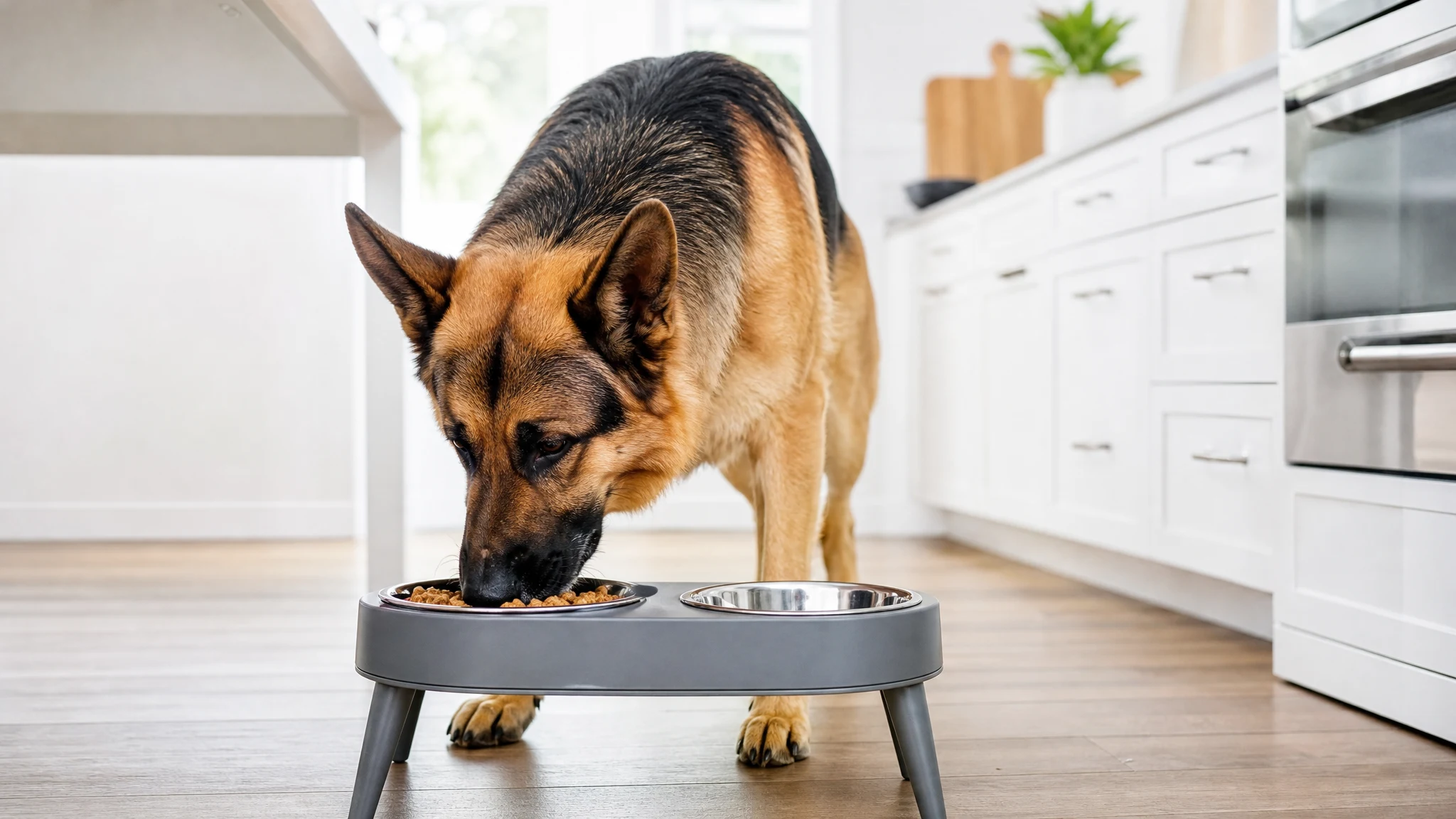
Many German Shepherds treat dinner like a race. The bowl is empty in under a minute, and the dog looks up for more.
A slow feeding dog bowl is one way to change that pace. This guide shows how to pick one, set it up, and tell whether it is helping. It is written for German Shepherds, but the steps suit most big, deep-chested dogs.
Why pace matters for this breed
The American Kennel Club lists bloat (gastric dilatation-volvulus, or GDV) among the health concerns for the German Shepherd Dog. Cornell University's Riney Canine Health Center lists feeding-related risk factors for GDV. They include large breed size, a deep chest, eating too quickly, one large meal a day, raised food bowls, and exercise soon after eating.
Cornell suggests two or more meals a day and notes smaller kibble. A bowl alone does not prevent bloat, and no bowl can promise that. Think of it as one part of a feeding routine, with your veterinarian guiding the rest.
The same Cornell page lists raised bowls as a risk factor. Keep any slow feeder on the floor.
What you need
- A slow feeding dog bowl, sized for a large dog (see step 2)
- A dry measuring cup or a kitchen scale
- Your dog's current food and its feeding guide from the bag or the brand's page
- A non-slip mat or a damp towel under the bowl
- A notebook or phone note for tracking meal times
- Mild dish soap and a bottle brush for cleaning ridges
Step-by-step: choosing and starting a slow feeder
Step 1: Confirm the problem is speed
Time one ordinary meal. Note how long the food lasts and whether your dog coughs, gags or brings food back up.
Fast eating is common, but it is not the only reason for vomiting or regurgitation. If you see repeated vomiting, a swollen or tight belly, retching with nothing coming up, or restlessness, call a veterinarian right away. Those signs need professional attention, not a new bowl.
Step 2: Size the bowl to the dog and the meal
The AKC gives adult German Shepherd weights of 65 to 90 pounds for males and 50 to 70 pounds for females. Height is 24 to 26 inches for males and 22 to 24 inches for females. That is a large dog with a long muzzle.
Measure one full meal in a cup first. Then check that the whole meal fits in the bowl without piling over the obstacles. A bowl that is too small makes kibble spill, and a dog that is frustrated may flip it.
Look for a wide base and a heavy or grippy build. Shepherds are strong and will push a light bowl across the floor.
Step 3: Match the obstacle pattern to the kibble and the muzzle
Slow feeder designs vary. Common types are raised ridges, mazes, and separate pockets.
- Wide, rounded ridges suit a long muzzle. The dog can reach in without scraping its nose.
- Deep, narrow mazes can frustrate a large dog and trap kibble. They are better kept for smaller breeds.
- Shallow pockets are a middle option, as long as each pocket is big enough for a few pieces.
Kibble size matters too. Royal Canin describes its German Shepherd Adult kibble as shaped and textured for the breed's long, strong muzzle and teeth. A bowl built for tiny kibble may not work well with large pieces. Try the bowl with your dog's actual food before you commit to a pattern.
Step 4: Check the material and the cleaning
Pick a bowl made for dogs, with no cracks or sharp seams. Stainless steel, ceramic and sturdy food-grade plastic are all common. Strong chewers can damage plastic, so inspect it often and replace it if it gets chewed or gouged.
Ridges hold food residue. Choose a bowl you can wash by hand with a brush, and wash it after every meal. Check the maker's page for dishwasher guidance rather than assuming.
Step 5: Settle the amount and the schedule
The bowl changes how fast the food goes in. It does not change how much your dog should get. Start from the label guide on your dog's food and adjust with your veterinarian.
Here are a few starting points that brands print on their own pages:
- Royal Canin says its German Shepherd Adult dry food should be fed in 2 to 4 equal portions per day.
- Royal Canin's German Shepherd Puppy table lists 2 7/8 cups per day at 2 months for a puppy with a target adult weight of 57 pounds.
- Hill's Science Diet Adult Large Breed Chicken & Barley lists 3 2/3 cups per day for a 60-pound adult dog.
These are starting guides for those specific foods, not a rule for every dog. Cups differ between foods because calorie density differs. Royal Canin lists 338 kcal per cup for its adult dry formula, and Hill's lists 365 kcal per cup for its adult large breed dry formula.
For age-based amounts and meal counts, see our German Shepherd feeding chart by age. If your dog has a health condition, confirm amounts with your veterinarian before changing anything.
Split the daily amount into at least two meals, in line with Cornell's suggestion. Puppies usually need more meals, so ask your vet.
Step 6: Introduce the bowl gradually
On day one, put in a normal meal and stay nearby. Let your dog work out the ridges on their own.
If your dog seems confused, spread the kibble loosely over the surface. Praise calm eating and give a small reward when they finish. Keep it relaxed and positive. Never force a dog to use the bowl or scold them for pushing it around.
Step 7: Place it, and keep meals calm
- Put the bowl on the floor on a non-slip mat.
- Feed in a quiet spot. Competition from other pets can speed up eating.
- Keep other dogs apart at mealtime.
- Avoid hard exercise right after a meal. Cornell lists exercise soon after eating as a GDV risk factor.
Step 8: Track results for two weeks
Time the same meal each day and write it down. Note any gagging, regurgitation, or gas, and how your dog seems afterward.
Take the notes to your vet if you have concerns. They are more useful than a general impression.
Tips that help
- Use the bowl for dry food. Wet or fresh foods can pack into the ridges and are hard to clean. Check the brand's own page for serving guidance on loaf, roll or frozen foods.
- Rotate in a food puzzle or a snuffle mat for variety if your dog gets bored.
- Weigh or measure every meal. A slow bowl makes it tempting to add extra to keep the dog busy.
- Watch growing puppies closely. Cornell advises against overfeeding fast-growing large-breed puppies and against adding calcium or vitamin D to a growing puppy's diet.
Common mistakes to avoid
- Buying a bowl that is too small. Spilled food and frustration follow.
- Raising the bowl on a stand. Cornell lists raised bowls as a bloat risk factor.
- Picking a maze that is too hard. A dog that gives up may eat from the floor, or gulp food that flicks out.
- Treating the bowl as a bloat fix. It is not one. Meal size, meal count and activity timing still matter.
- Skipping cleaning. Old food in the ridges is unpleasant and may spoil.
- Ignoring signs of illness. Fast eating can overlap with other issues. German Shepherds are also predisposed to exocrine pancreatic insufficiency, where weight loss and poor digestion can occur despite a big appetite, according to a Mississippi State University College of Veterinary Medicine conference paper. A bowl will not address that, so raise it with your vet.
What results to expect
Many owners find that a slow feeding dog bowl stretches a meal from under a minute to several minutes. Some dogs may also gulp less air and bring up less food, although results vary from dog to dog.
The bowl may not suit every dog. Some dogs ignore the obstacles, and others get frustrated. If your dog is not settling after a couple of weeks, try a different pattern or talk with your vet about other ways to slow meals.
We compared label and brand-page data for the foods mentioned here. We did not run feeding trials or taste tests, and we did not test any bowls.
Sources
- American Kennel Club, German Shepherd Dog breed page
- Cornell University College of Veterinary Medicine, Gastric dilatation volvulus (GDV) or bloat
- Cornell University College of Veterinary Medicine, Canine hip dysplasia (CHD)
- Mississippi State University College of Veterinary Medicine, Enzymes gone AWOL: Canine Exocrine Pancreatic Insufficiency
- Royal Canin, German Shepherd Adult Dry Dog Food
- Royal Canin, German Shepherd Puppy Dry Dog Food
- Hill's Science Diet, Adult Large Breed Chicken & Barley Recipe