Good Dog Food for German Shepherd: Signs a Food Isn't Working
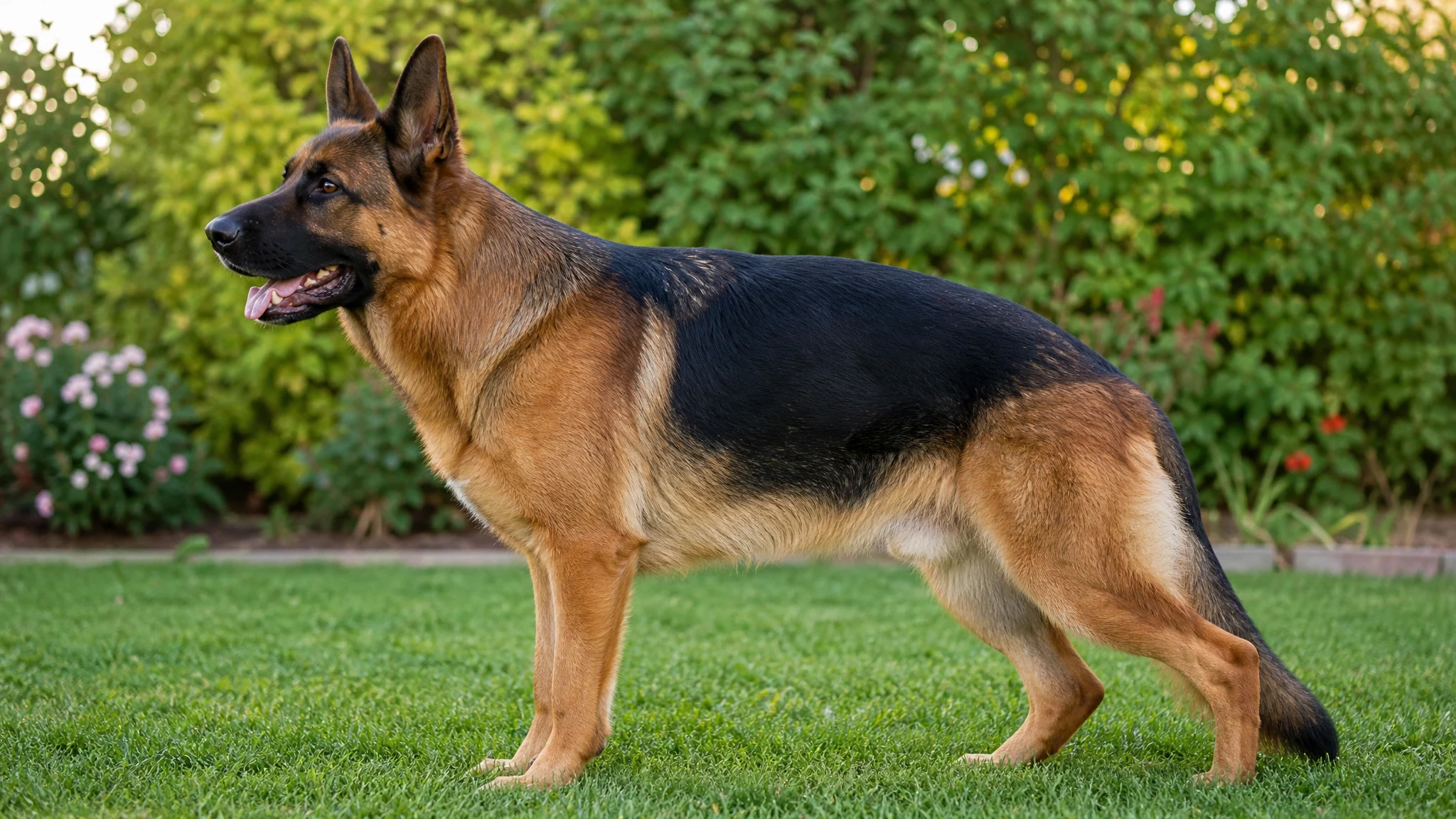
General nutrition information compiled from product labels and published sources, not veterinary advice. Your veterinarian is the right person to choose a diet for your dog, especially one with a health condition.
A good dog food for a German Shepherd should keep your dog at a steady weight, with a healthy coat, regular stools and steady energy. When a food is a poor match, the signs are usually quiet at first.
This guide shows you how to track those signs over a few weeks, read the label for clues, and decide when to bring in your veterinarian. It does not diagnose anything. Many of these signs have causes that have nothing to do with food.
What You Need
- The bag or can of the current food, with the full label and the lot code.
- A notebook or phone notes app for a daily log.
- A measuring cup or kitchen scale, so portions stay the same.
- A bathroom scale, or a vet clinic scale, for weight checks.
- Your dog's recent vet records, if you have them.
- About three to four weeks of steady routine, with no new treats or chews.
Step 1: Know What Normal Looks Like for the Breed
The AKC breed page lists adult German Shepherd Dogs at 65 to 90 pounds for males and 50 to 70 pounds for females. Height is 24 to 26 inches for males and 22 to 24 inches for females. Life expectancy is listed at 12 to 14 years.
Use those ranges as a loose frame only. Your own dog's healthy weight depends on frame, age and activity, and your veterinarian can give you a target. The goal is a stable baseline you can compare against.
Step 2: Start a Daily Log
Write down the same few items every day:
- What and how much your dog ate, including treats.
- Stool: how often, and how firm or loose.
- Any vomiting, gas, or belly noises.
- Itching, paw licking, ear scratching, or skin redness.
- Energy level on walks and play.
- Appetite: eager, picky, or skipping meals.
A log turns a vague worry into a pattern. It also gives your vet something concrete to read.
Step 3: Watch for the Common Warning Signs
These are the signs owners most often connect to a food that may not suit a dog. Any one of them can also point to a health problem, so treat them as reasons to look closer, not as proof.
Digestive signs
Ongoing loose stool, frequent gas, regular vomiting, or a stool pattern that changes every few days can all be worth tracking. A short upset after a diet change is common. Trouble that lasts beyond a couple of weeks deserves a call to your vet.
Weight that drifts the wrong way
Weight loss on a food your dog eats well is a flag. German Shepherds are listed as predisposed to exocrine pancreatic insufficiency (EPI), a condition that causes maldigestion and weight loss, according to a Mississippi State University College of Veterinary Medicine conference paper. No food treats EPI. If your dog eats normally and still loses weight, ask your veterinarian about testing rather than switching foods again.
Weight gain matters too. Cornell's Riney Canine Health Center notes that hip dysplasia is genetic but modified by nutrition and growth rate. It advises against overfeeding fast-growing large-breed puppies.
Skin and coat changes
Constant scratching, chewing at the paws, recurring ear trouble, or a dull, flaky coat can have many causes, including fleas, seasonal allergies and food reactions. A vet can sort these out. Switching foods on a guess can hide the clue.
Low energy or a picky appetite
A dog that suddenly lags on familiar walks, or that turns away from a food it used to eat, may have a health issue. Note when it started and what else changed.
Feeding-related bloat risk
The AKC lists bloat (gastric dilatation-volvulus, or GDV) among the health concerns for the breed. Cornell's Riney Canine Health Center lists these feeding-related risk factors: large breed size, deep chest, eating too quickly, feeding once daily or in large meals, raised food bowls, and exercise soon after eating. Cornell suggests two or more meals a day with smaller kibble.
This is a feeding-routine issue more than a food-brand issue. If you suspect bloat, contact a veterinarian or emergency clinic right away.
Step 4: Rule Out the Routine Before Blaming the Food
Before you decide the food is the problem, check the basics:
- Are portions measured, not scooped by eye?
- Are treats, table scraps and chews adding up?
- Did the last switch happen over several days or all at once?
- Is your dog eating very fast?
- Has anything else changed, such as a new home, a new pet, or a medication?
Fixing one of these can settle things without changing the food at all.
Step 5: Read the Label for Fit
Next, check whether the food matches your dog's life stage. Start with the adequacy statement, which names the life stage the food is formulated for.
For puppies, this matters a lot. The Kentucky Agricultural Experiment Station rule 12 KAR 3:039, which uses the AAFCO model wording, says a growth or all-life-stages food must carry one of two phrases. One is "including growth of large size dogs (70 lb. or more as an adult)." The other is "except for growth of large size dogs (70 lb. or more as an adult)."
Because many German Shepherds land near that 70 pound line, a puppy food with the "including" wording is the better fit. Cornell also advises feeding large-breed-formulated diets during growth and not adding calcium or vitamin D to a growing puppy's diet.
As examples of how this looks on a real label, the Royal Canin German Shepherd Puppy dry food carries the "including growth of large size dogs" phrase. Its first five ingredients are chicken by-product meal, corn, wheat gluten, oat groats and brewers rice. It lists minimum protein of 28 percent and minimum fat of 14 percent. The Hill's Science Diet Puppy Large Breed Chicken & Brown Rice Recipe uses a feeding-test statement for growing puppies, with no large-size phrase on the data we compared. Hill's publishes average dry-matter nutrients rather than label minimums.
We compared label data only. We did not run feeding trials or taste tests, so these are descriptions of labels, not results.
For adults, compare the ingredient list, calories per cup and the feeding guide. The Royal Canin German Shepherd Adult dry food lists 338 kcal ME per cup and suggests 2 to 4 equal portions a day. Its page prints an adequacy statement that names a different breed's formula, so check the bag itself for the correct wording. The Hill's Adult Large Breed Chicken & Barley Recipe lists 365 kcal per cup. Its guide gives 3 2/3 cups per day for a 60 pound dog. Treat feeding guides as starting points, then adjust with your vet based on body condition.
For more on what shapes a German Shepherd's diet, see German Shepherd nutrition: the diet factors that matter.
Step 6: Take the Log to Your Veterinarian
Bring your notes, the food label and a photo of the bag. Ask whether the signs fit a diet issue or point to something else, such as parasites, an orthopedic problem or a digestive disorder.
Hip and elbow dysplasia are both noted for the breed by the AKC and Cornell. Stiffness or reluctance to move is a reason for an exam, not a food swap. The German Shepherd Dog Club of America's health statement, hosted by the AKC, says the parent club requires OFA hip and elbow certification for breeders.
Prescription diets are something only a veterinarian prescribes. Do not start one on your own.
Step 7: Change Foods Carefully, If Your Vet Agrees
If a switch makes sense, do it on purpose:
- Choose a food that matches your dog's life stage and size.
- Mix a little of the new food into the old, and raise the share over about a week or longer.
- Keep the same meal schedule and portion method.
- Change one thing at a time, and keep logging.
- Give the new food three to four weeks before judging it.
Tips and Common Mistakes
- Switching too often. Rotating foods every few days makes it impossible to see what caused what.
- Trusting marketing words. "Premium" and "natural" are not label standards. The adequacy statement and the ingredient list tell you more.
- Assuming grain-free is better. The FDA's Q&A on non-hereditary dilated cardiomyopathy (DCM) says reports involve both grain-free and grain-containing diets. It says counts of reports alone do not establish a causal relationship, and that it has not requested recalls. Ask your vet what suits your dog.
- Adding supplements on your own. This is especially risky for growing puppies. Cornell advises against calcium or vitamin D supplements for them.
- Ignoring the calories from treats. They count toward the daily total.
- Feeding one big meal. Cornell lists once-daily or large meals as a GDV risk factor.
What Results to Expect
If the routine and food are a good match, many owners see steadier stools, a stable weight and consistent energy over several weeks. Results vary from dog to dog, and no food can promise a particular outcome.
If signs continue after you have fixed the routine and given a suitable food time, go back to your vet. Ongoing trouble often needs a medical answer, not another bag of food.
Sources
- AKC: German Shepherd Dog breed page
- Cornell University College of Veterinary Medicine: Gastric dilatation volvulus (GDV) or bloat
- Cornell University College of Veterinary Medicine: Canine hip dysplasia
- Cornell University College of Veterinary Medicine: Elbow dysplasia
- Mississippi State University College of Veterinary Medicine: Canine Exocrine Pancreatic Insufficiency
- German Shepherd Dog Club of America Health Statement, December 2015
- Kentucky Agricultural Experiment Station, 12 KAR 3:039 Nutritional adequacy
- U.S. FDA: Questions and Answers on non-hereditary DCM in dogs
- Royal Canin US: German Shepherd Puppy
- Royal Canin US: German Shepherd Adult
- Hill's Pet: Science Diet Puppy Large Breed
- Hill's Pet: Science Diet Adult Large Breed